What’s the difference between a whale, dolphin and porpoise?

A common question many people ask, but few know the answer. Learn how to identify between these marine mammals.


NOAA | Public Domain
A North Pacific right whale

Take Action

Ian Giancarlo
Ian Giancarlo

Former Protect Our Oceans Campaign Advocate, Environment Oregon Research & Policy Center

If you’ve ever been been at the beach or on the ocean and you’ve seen an animal come of up for air, breach out of the water or spout water in the air it was surely a magical experience. Odds are what you saw that day was a dolphin, whale or porpoise. The three exist across the country and have many things in common but have distinct differences between them.
Whales, dolphins and porpoises are all marine mammals called cetaceans. They all give live birth, breastfeed their young and are very intelligent animals.
Two blue whales by NOAA, via Flickr | Public Domain NOAA | Public Domain
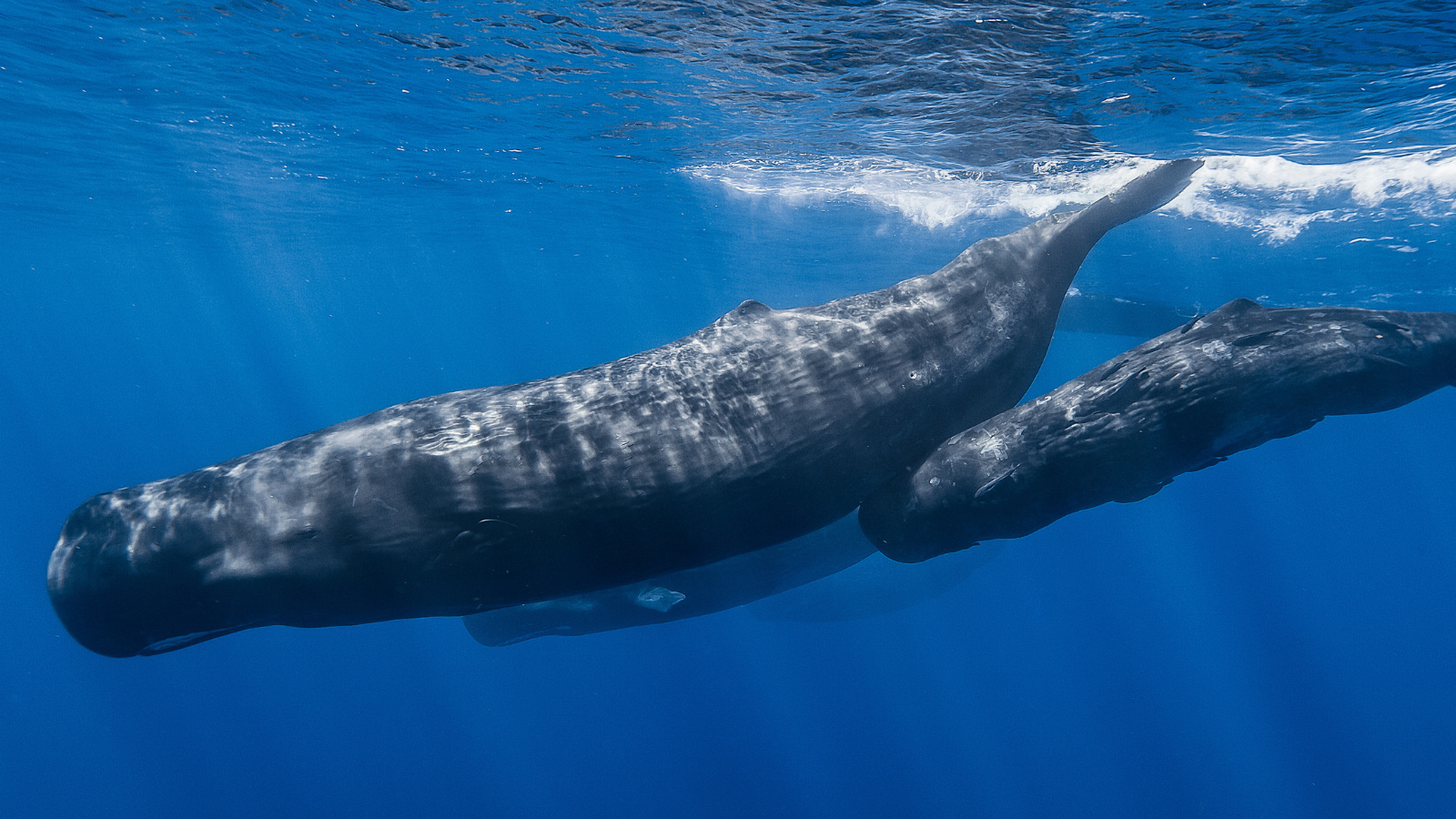
pod of sperm whales swimming
Sperm whales, the largest toothed whales, are found in deep oceans around the globe Gabriel Barathieu | CC-BY-2.0

Baleen versus toothed whales

From this point they start to differ and can be split into two categories: baleen and toothed whales. Baleen whales are the largest cetaceans, such as humpback and blue whales – the largest animals ever to exist. They have baleen plates in their mouth, which look a bit like tooth brush bristles, and filter their tiny prey, like krill and small fish from ocean water. Baleen whales generally are slower moving than other whales, dolphins and porpoises and have two blowholes.

Toothed whales (which confusingly also include dolphins and porpoises) include animals like sperm whales, orcas and harbor porpoises, to name a few. These animals rely on larger fish and ocean life as a source of food and often times consume other marine mammals like seals or sea lions. Toothed whales also only have one blowhole, regardless of animal.

Dolphins and porpoises

Narrowing it down further are the differences between a dolphin and a porpoise, which are very similar. Some even use the words interchangeably but nowadays there are generally agreed upon distinctions.
Dolphins generally have a leaner appearance and are longer and slender. They frequently have a pointed beak and have conical shaped teeth. Porpoises are generally more round bodied, do not feature a beak or pointed face, and have spade-shaped teeth. These are the primary ways to distinguish between cetaceans but irrespective of animal, all face similar threats from humans.
Fishing gear used to catch lobster and crab poses a threat to North Atlantic right whales: over 85% bear scars from entanglements.

Common threats

Every year, scores of whales, dolphins and porpoises are accidentally killed across the country because of vessel strikes, pollution or by being entangled in fishing gear. This comes at a time when there are known and proven solutions to addressing these threats. We’re working across the country to save the whales (dolphins and porpoises too) and you can join us in doing so.
Authors

Ian Giancarlo

Former Protect Our Oceans Campaign Advocate, Environment Oregon Research & Policy Center