Ask Governor Healey: Save our bees, ban neonic-coated seeds

Our team is talking to thousands of Bay Staters about the threats facing pollinators.
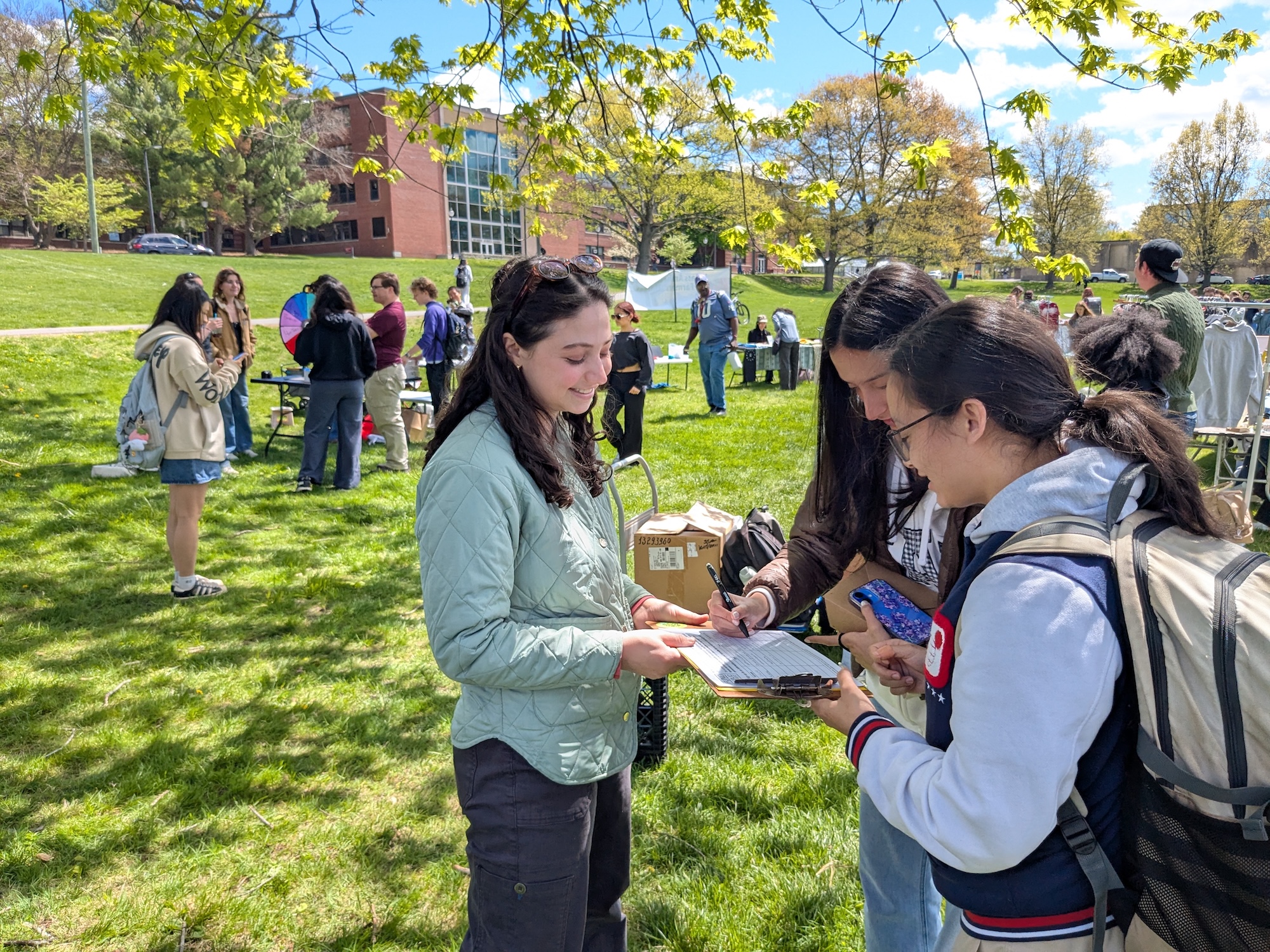
This summer, Environment Massachusetts canvassers are knocking on doors around the Bay State, building support to save the bees.
If you see someone in a bright blue Environment Massachusetts shirt walking around the neighborhood, here’s why they’re hard at work—and why you should be a part of our movement:
At Environment Massachusetts, we’re working to defend wild places and wildlife. One type of wildlife, bees, need our help now more than ever. There are about 4,000 native bee species in the U.S., and about a quarter of them are vulnerable to extinction Here in the Bay State, we are seeing similar trends.
Take the rusty patched bumblebee for example. Just over 100 years ago, this wild bee was considered “common” in Massachusetts. Now, rusty patched bumblebees have all but disappeared from our state.
Population declines like this are far too common. Since 2017, five bee species including the parnassia miner bee and the macropis cuckoo bee have been listed as endangered by the Massachusetts Endangered Species Act.
Bee populations are seeing such steep declines for a few reasons. In part, development has stripped up much of the native habitat that bees rely on for food and mating. Another major reason for their decline is widespread pesticide use.
Neonicotinoids, or “neonics,” are a widely-used pesticide that are toxic to bees and other pollinators. These pesticides are either sprayed on plants or added to seeds before planting.
When ingested by bees, neonics can damage their brains, attack their nervous systems, weaken their immune systems, and even paralyze and kill them. Despite the threats neonics pose to bees and other pollinators, the Environmental Protection Agency (EPA) estimates that between 70 and 80% of corn, soybean and cotton seeds are treated with these bee-killing pesticides. Other common seeds coated with neonicotinoids include canola, wheat, sunflower, potato and many vegetables.
In 2021, after the Massachusetts Department of Agricultural Resources released a scientific literature review finding overwhelming evidence that neonics are harming pollinators, our lawmakers restricted the consumer use and sale of neonicotinoids. But while Massachusetts has taken steps to restrict who can purchase neonics (unless you have a pesticide license, you cannot), our lawmakers have not restricted the use of neonic-coated seeds.
That means much of the food that we produce in the Bay State is still being treated with neonics. For example, in 2023 Massachusetts produced 11,000 acres of corn, a crop that typically uses neonic-coated seeds.
Some states are moving beyond neonics. In 2023, New York and Vermont passed laws that ban the sale and use of neonicotinoid-coated seeds for major field crops. Here in Massachusetts, our lawmakers can do more. We’re urging Gov. Maura Healey to follow our neighbors’ leads and restrict the commercial sale of neonic-coated seeds. The survival of our bees, butterflies and other pollinators depends on it.
That’s exactly why we’re going door-to-door. We are having countless conversations with our neighbors to raise awareness about the plight of native bees and the need for restrictions on neonic-coated seeds. Every conversation is an opportunity to garner support for policies that protect bees and other pollinators in Massachusetts.
We’re hard at work walking door to door, firing Bay Staters up to take action to save the bees. But building public support to save the bees means we need everyone to get involved and raise their voices for wildlife.
Right now, you can help make lasting change for bees in Massachusetts by signing our letter to Governor Maura Healey urging her to ban the commercial sale of neonic-coated seeds to save Massachusetts’ bees. Add your name.
Senior Director, Conservation America Campaign, Environment America
Steve directs Environment America’s efforts to protect our public lands and waters and the species that depend on them. He led our successful campaign to win full and permanent funding for our nation’s best conservation and recreation program, the Land and Water Conservation Fund. He previously oversaw U.S. PIRG’s public health campaigns. Steve lives in Sacramento, California, with his family, where he enjoys biking and exploring Northern California.