


Volunteers collected over a million plastic pellets across 249 sites during a month long event in May.

International Plastic Pellet Count Steering Committee
American Bird Conservancy, Environment America Research and Policy Center, Environmental Action, Nurdle Patrol, Oceana, The Surfrider Foundation, U.S. PIRG Education Fund, Waterkeeper Alliance, 5 Gyres
Plastic pellets, tiny beads that serve as the foundational material for countless plastic products, are a widespread yet often overlooked source of pollution. Despite their harmful environmental impact, discharges and spills of these pellets, also known as nurdles, are rarely tracked or well regulated.
This report highlights findings from the second International Plastic Pellet Count, a global citizen science initiative aimed at measuring the scale of this pollution near waterways. In May 2026, volunteers at approximately 249 events across 6 countries—including 31 states and Washington, D.C.— collectively found and documented 1,073,433 pellets worldwide. This year’s results have brought the ongoing plastic pollution crisis into sharper focus, with a nearly 22-fold increase in total findings from the previous year.
Below is a summary of the 2026 International Plastic Pellet Count and its findings. The full report can be downloaded on the left.

Pre-production plastic pellets are tiny, bead-like pieces of plastic, usually less than five millimeters in size, which makes them microplastics. Once melted down, they serve as the base material for manufacturing a wide range of everyday items, including water bottles, plastic bags, and foam food containers.
Plastic pellets commonly make their way into the environment during production, handling, and transportation, with many ending up in rivers, lakes, and oceans. Some of these discharges are accidental, such as train derailments, while others are intentional, with some companies, particularly in the United States, are permitted to discharge directly into wastewater and waterways as required by the Clean Water Act. Because they are intentionally manufactured at a small size, they are considered primary microplastics and are especially difficult to contain or recover once released. But a large majority of plastic pellet pollution is preventable.
In aquatic ecosystems, plastic pellets pose serious risks to wildlife. Fish, birds, and other animals often mistake them for food, leading to internal blockages, reduced nutrition, and exposure to toxic substances. When predators consume prey that have ingested pellets, the plastics may move up the food chain through a process known as trophic transfer.

Pre-production plastic pellets contain a range of chemical additives, including plasticizers, flame retardants, and UV stabilizers. They can also act like sponges, absorbing pollutants from their surroundings such as dichlorodiphenyltrichloroethane (DDT), polychlorinated biphenyls (PCBs), and mercury, while simultaneously releasing their own harmful substances. Research has found that when fish ingest microplastics, they may experience inflammation, immune system disruption, genetic damage, and other toxic effects. These particles can also alter fish behavior, affecting how they swim and feed. In species like sea urchins, even low levels of exposure have been linked to oxidative stress and problems with embryo development.
Plastic pellets are a part of the growing microplastic problem. Microplastics have been found in the human body. They can also absorb and carry harmful chemicals such as pesticides, heavy metals, and persistent organic pollutants from the surrounding environment. When these contaminated plastics enter the food chain, particularly through seafood, there is potential for humans to ingest them as well. In addition, plastics themselves may contain additives that are known carcinogens like plasticizers and stabilizers that can leach out and interfere with hormone function or contribute to other health issues.

Volunteers surveyed waterways for plastic pellets as part of the International Plastic Pellet Count. Standardized protocols required surveys in 10-minute intervals, with all data logged into Nurdle Patrol to calculate the total counts. By conducting a coordinated global count, we gain a better understanding of the extent of pre-production plastic pellet pollution and how it spreads over time. For more information on detailed methods, see the Methodology.
KEY FINDINGS INCLUDE:
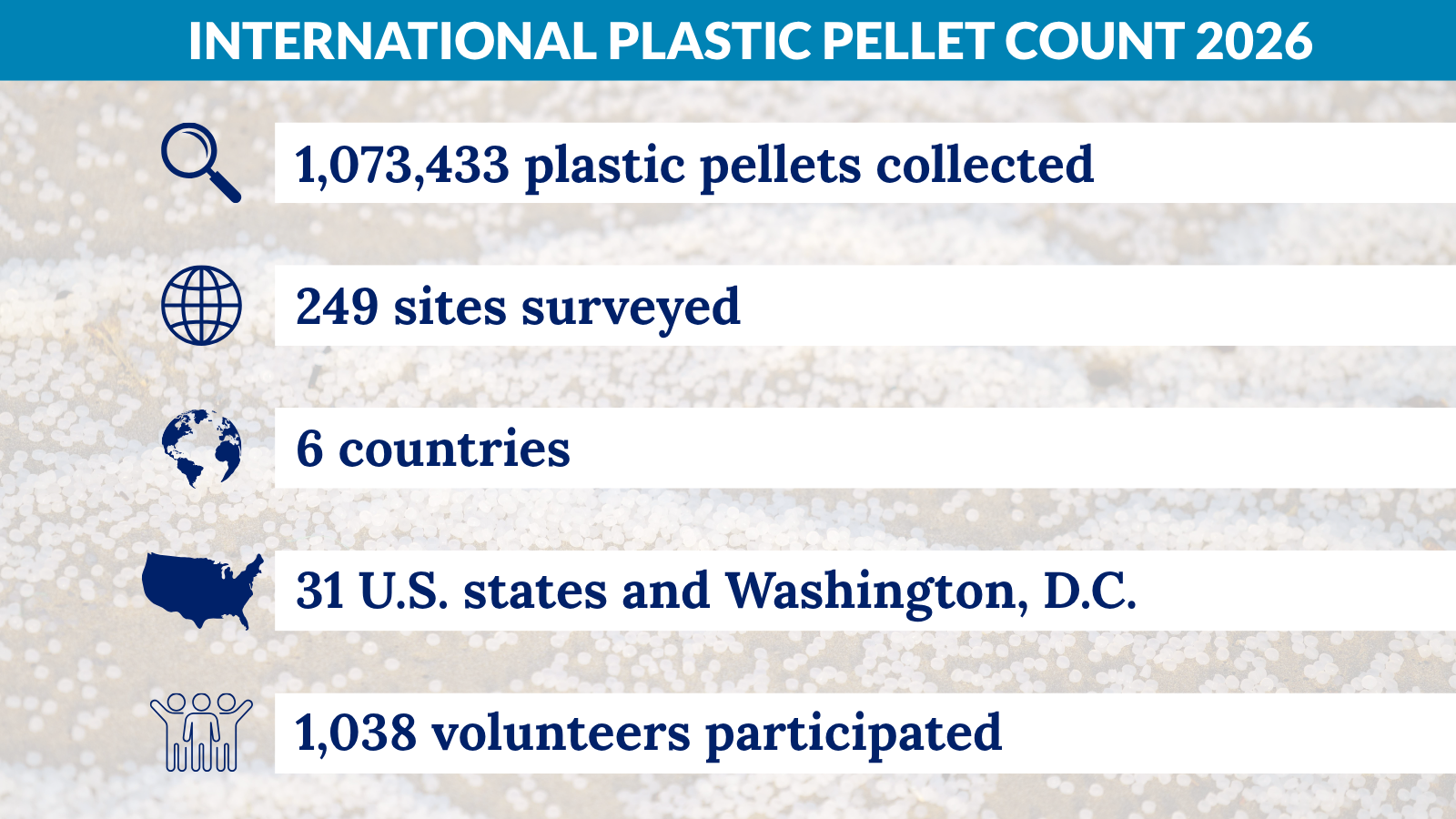
By removing over a million plastic pellets from the environment in a single month, the International Plastic Pellet Count helped build awareness of plastic pellet pollution and engaged over a thousand volunteers in an ongoing citizen science effort. 136 counts found at least one pellet (54%), which helps address existing data gaps. Plastic pellet pollution is often most concentrated near sites where pellets are manufactured, used, or transported. This pattern was confirmed by over 1,035,000 pellets collected near a plastic production facility along the Victoria Barge Canal in Texas. Given that pellets were also found outside of the immediate range of these sites, our data demonstrate that plastic pellets are a widescale problem spreading throughout waterways around the world.
UNITED STATES
A total of 1,066,542 pre-production plastic pellets were logged across 31 states and Washington, D.C. Texas sites reported the highest counts by far, with 1,040,880 pellets, most of which were found along the Victoria Barge Canal.
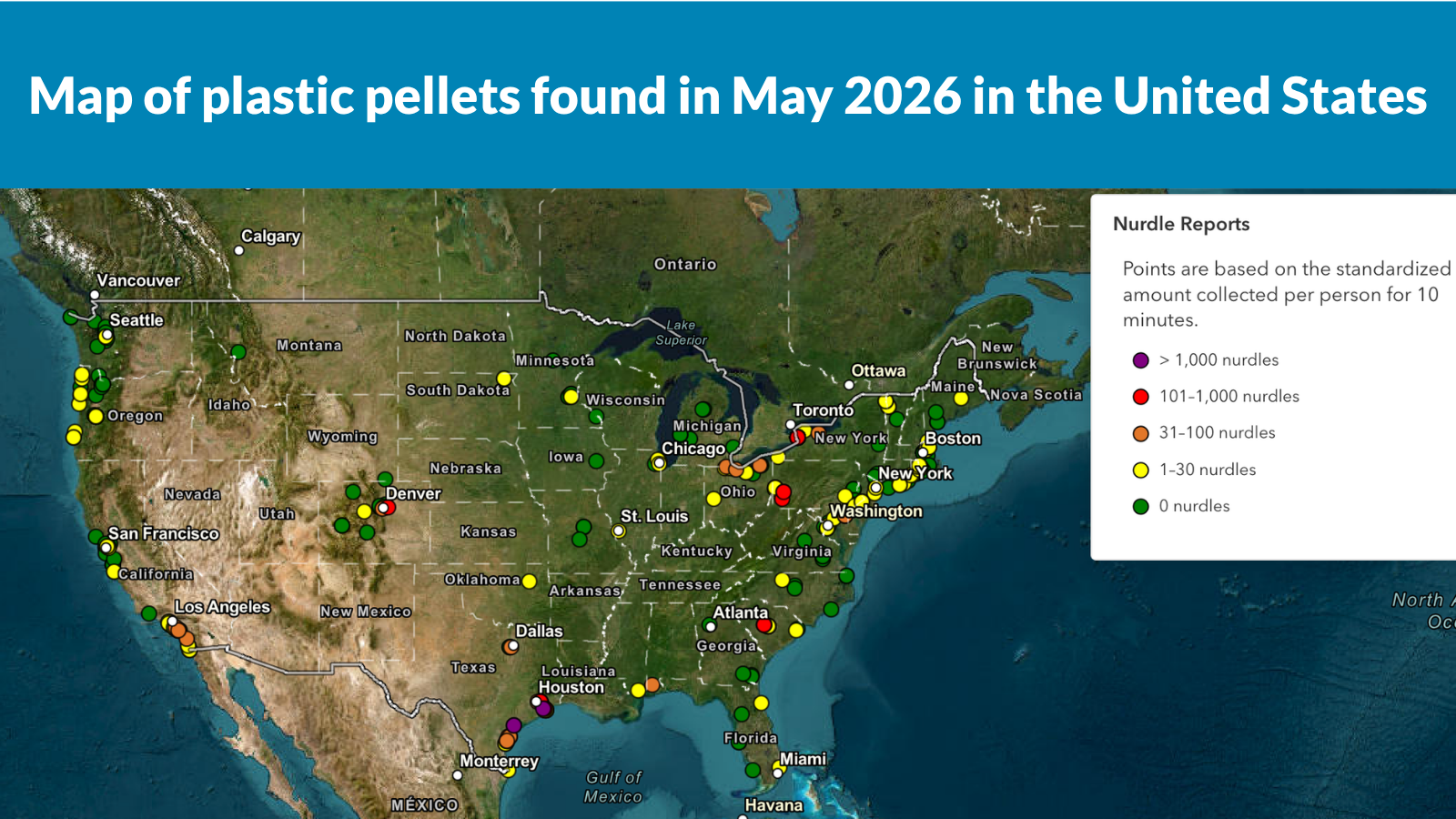
GLOBAL FINDINGS
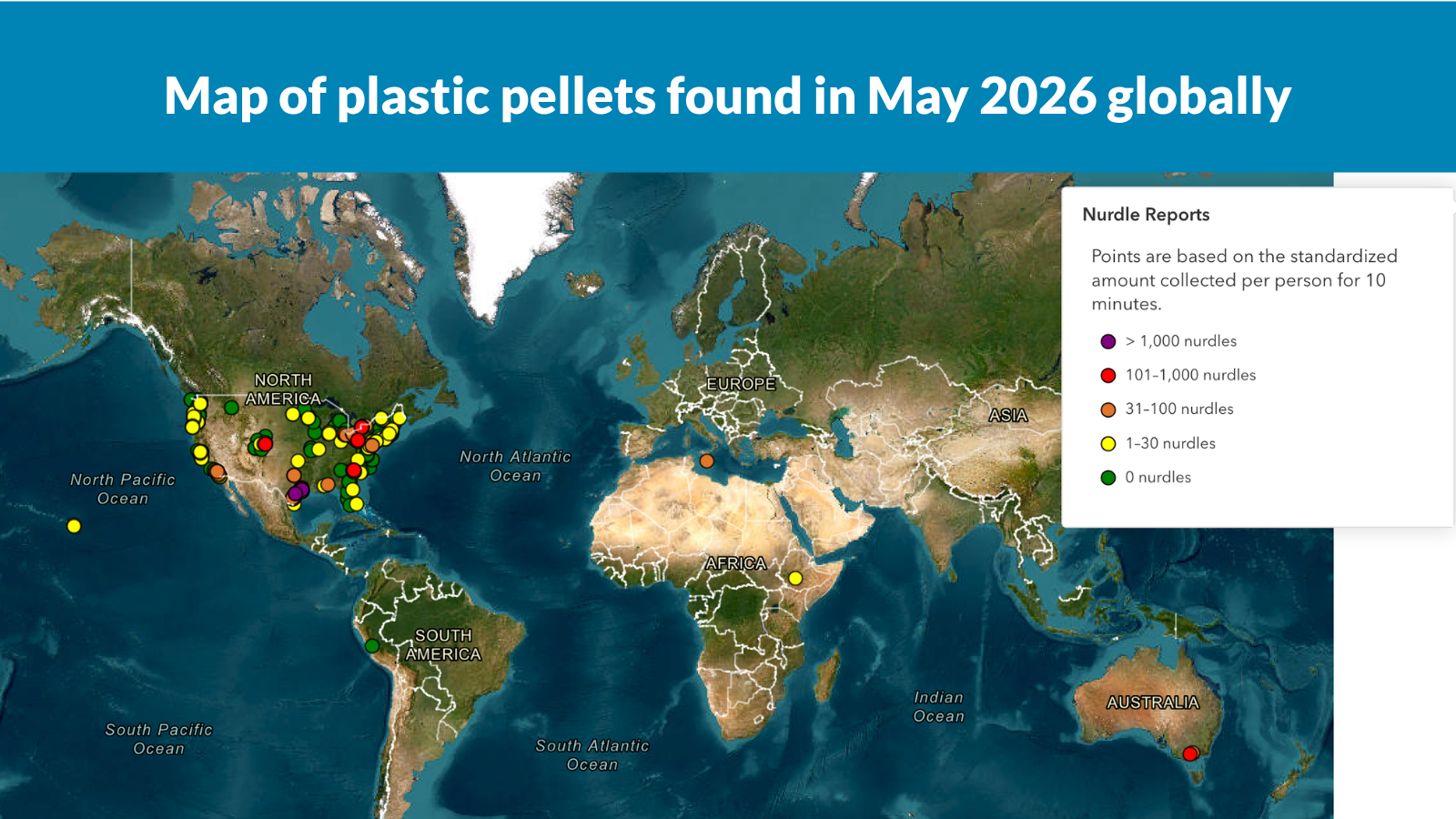
Outside of the U.S., sites in Australia reported the highest number of pre-production plastic pellets with 6,485 pellets counted. These demonstrate that globally, governments must do more to stop pellet pollution from impacting waterways. International action is needed to prevent plastic pollution at its source.
While there has been some government action to address plastic pellet pollution, more must be done to successfully curb the spread of microplastics through our waterways and our world, given that current voluntary efforts have not stopped ongoing pellet spills and loss around the world.
A range of policy solutions has already been proposed to address the issue, including key measures like preventing the loss of pellets in transportation and production which would greatly reduce plastic pellet pollution.
In the U.S., legislation such as the Plastic Pellet Free Waters Act, which targets pollution from pre-production pellets, represents a possible path forward. Internationally, the European Union enacted legislation to reduce pellet loss, while the United Nations is working toward a Global Plastics Treaty to tackle plastic pollution on a global scale. Some states in the U.S. are also leading the way forward, such as Colorado, which in 2026 adopted a law making the discharge of plastic pellets explicitly illegal.
The full report outlines key policy solutions that communities can use to take action on the state, federal and global levels to address plastic pellet pollution.
Download the full report for citations, acknowledgements, a list of participating organizations, the methodology and data from the event.
Thank you to everyone who participated in this year’s event.


